
What Is the Difference Between Technical Writing and Content Writing?
A Complete Guide to Understanding Technical Writing and Content Writing in the Digital Age
In the world of professional writing, two terms often get confused with each other: technical writing and content writing. While both involve creating written material, the purpose, audience, tone, and structure of each are fundamentally different. Businesses that fail to understand this distinction often end up hiring the wrong type of writer for the job, which can lead to poorly communicated instructions, confusing documentation, or marketing content that misses the mark entirely.
In this article, we will explore what technical writing and content writing actually mean, how they differ in practice, why both are essential for different business needs, and how partnering with a Top Technical Writing Agency can ensure your documentation and communication materials are clear, accurate, and professional.
What Is Technical Writing?
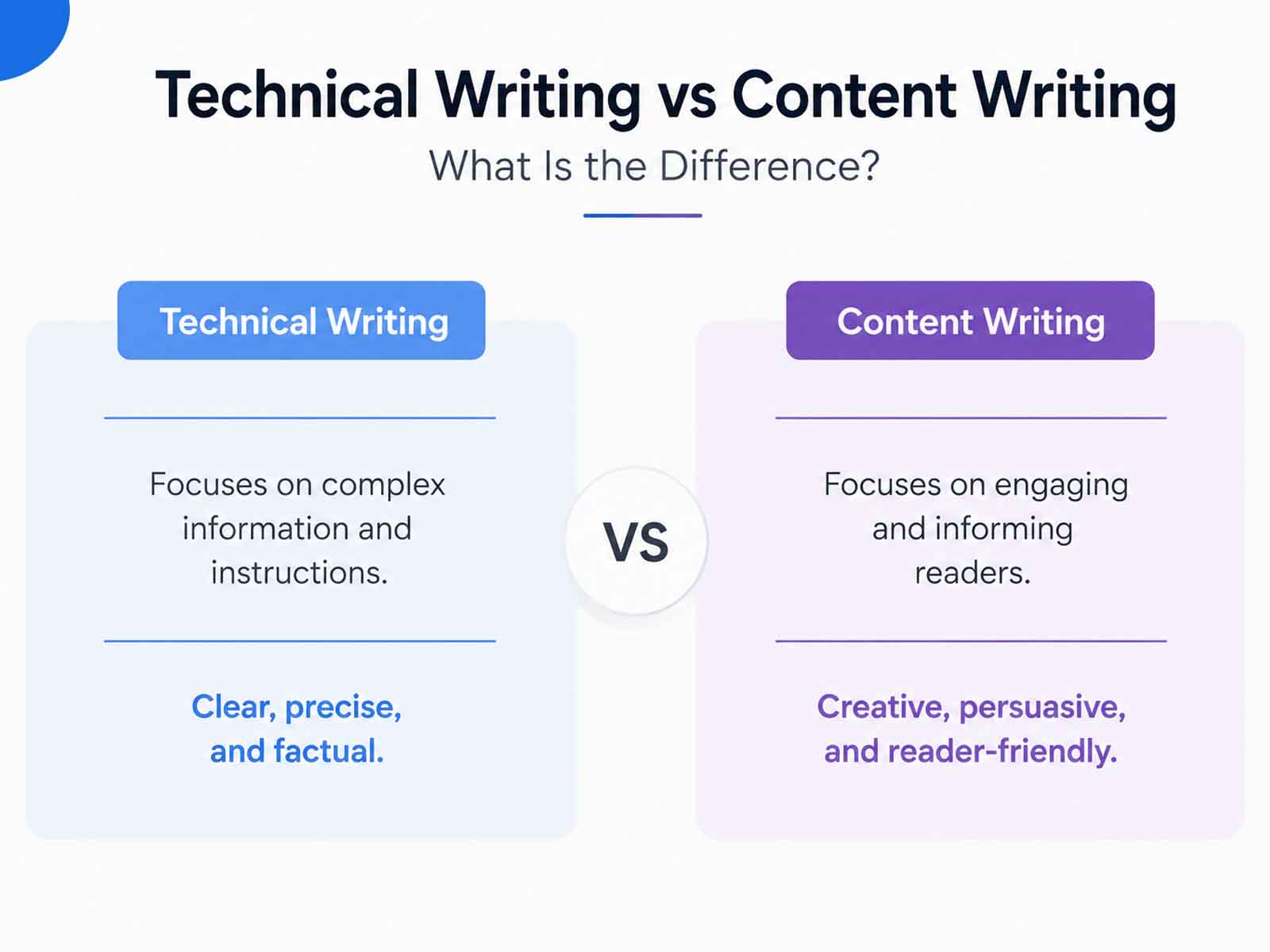
Technical writing is a specialized form of writing that focuses on explaining complex information in a clear, precise, and structured manner. It is primarily used to communicate technical or specialized subject matter to a specific audience whether that audience consists of engineers, developers, end-users, or customers who need to understand how a product or system works.
Technical writing is not about persuasion or entertainment; it is about clarity, accuracy, and usability. The goal is to help the reader complete a task, understand a process, or troubleshoot an issue without confusion.
Common examples of technical writing include:
- User manuals and instruction guides
- Standard operating procedures (SOPs)
- API documentation
- Software installation guides
- Product specifications
- White papers and technical reports
- Safety and compliance documentation
A technical writer must have a strong understanding of the subject matter, whether it's software, engineering, medical devices, or manufacturing processes. They often work closely with subject matter experts, engineers, and developers to translate complicated technical concepts into simple, actionable language that the end user can easily follow.
What Is Content Writing?
Content writing, on the other hand, is a broader form of writing primarily used for marketing, engagement, and audience building. The main goal of content writing is to inform, entertain, or persuade readers while also supporting a brand's visibility and SEO performance.
Content writers focus on creating material that resonates emotionally with readers, builds brand voice, and encourages action such as making a purchase, signing up for a newsletter, or sharing the content on social media.
Common examples of content writing include:
- Blog posts and articles
- Social media captions
- Website copy and landing pages
- Email marketing campaigns
- Press releases
- Video scripts
- SEO-optimized content
Unlike technical writing, content writing allows more creative freedom. Content writers often use storytelling techniques, emotional appeal, and persuasive language to connect with their audience and drive engagement.
The Core Difference Between Technical Writing and Content Writing
To simplify the distinction, think of it this way: technical writing teaches, while content writing engages. Technical writing is meant to guide someone through a process with zero ambiguity, while content writing is meant to capture attention and build a relationship with the reader.
Here are the fundamental differences between the two:
1. Purpose
Technical writing aims to inform and instruct with complete accuracy. Content writing aims to engage, persuade, and build brand awareness.
2. Audience
Technical writing is usually written for a specific, often specialized audience, such as engineers, developers, or product users. Content writing is written for a broader audience, including potential customers and general readers.
3. Tone and Style
Technical writing uses a formal, straightforward, and objective tone with no room for ambiguity. Content writing often uses a conversational, creative, and brand-driven tone.
4. Structure
Technical writing follows strict formatting, such as numbered steps, tables, and clearly labeled sections. Content writing follows a more flexible structure designed to keep readers engaged from start to finish.
5. Creativity
Technical writing leaves little to no room for creative expression, as accuracy is the top priority. Content writing thrives on creativity, storytelling, and persuasive techniques.
6. Goal Outcome
The outcome of technical writing is a reader who successfully completes a task or understands a process. The outcome of content writing is a reader who feels engaged, informed, or persuaded to take action.
Despite these differences, both forms of writing require strong research skills, clear communication, and a deep understanding of the target audience. A skilled writer in either discipline must know how to simplify complex ideas the difference lies in why they are simplifying them.
Why Do Businesses Need Both Technical Writing and Content Writing?
Many businesses assume that hiring one type of writer can cover all their content needs. However, this often results in poor-quality documentation or marketing content that fails to achieve its purpose. Understanding when to use each type of writing is essential for business success.
Here's why businesses benefit from investing in both:
- Improves Customer Support: Clear technical documentation reduces support tickets and helps customers solve problems independently.
- Builds Brand Trust: Well-written content builds an emotional connection with your audience, encouraging loyalty and repeat engagement.
- Reduces Errors and Confusion: Accurate technical writing minimizes misunderstandings, especially in industries like software, healthcare, and manufacturing.
- Boosts SEO and Visibility: Strong content writing improves search engine rankings and drives organic traffic to your website.
- Enhances Product Adoption: Clear user guides and manuals help customers understand and use a product correctly, improving satisfaction.
This is exactly why many companies are now turning to Affordable Technical Writing Services that offer both technical documentation and content marketing support under one roof ensuring consistency across all business communication.
How Technical Writing and Content Writing Work Together ?
Although these two disciplines serve different purposes, they often complement each other within a single business strategy. For example, a software company may need:
Step 1: Technical Documentation
A technical writer creates a detailed user manual explaining how to install and use the software correctly.
Step 2: Marketing Content
A content writer then creates blog posts, landing pages, and social media content promoting the software's features and benefits.
Step 3: Simplified Guides
Sometimes, technical writers collaborate with content writers to simplify technical guides into beginner-friendly blog content for a general audience.
Step 4: SEO Optimization
Content writers optimize both marketing and simplified technical content with relevant keywords to improve search engine visibility.
Step 5: Continuous Updates
Both technical and content writers regularly update their respective materials as products evolve and search trends change.
This collaborative approach ensures that a business communicates effectively with both its internal users (through documentation) and its external audience (through engaging content).
The Role of Professional Technical Writing Services
As products and systems become more complex, businesses can no longer rely on informal or poorly structured documentation. Investing in professional Technical Writing Experts ensures that manuals, guides, and technical reports are accurate, well-organized, and easy to follow.
Professional technical writing services typically offer:
- In-depth research and collaboration with subject matter experts
- Clear, step-by-step documentation tailored to the target audience
- Consistent formatting and style across all technical materials
- Editing and proofreading for accuracy and clarity
- Localization and translation support for global audiences
Partnering with an experienced Top Technical Writing Agency saves businesses time and reduces the risk of miscommunication, especially in industries where precision is critical, such as software development, healthcare, engineering, and manufacturing.
Common Misconceptions About Technical Writing and Content Writing
There are several misconceptions that often lead businesses to hire the wrong type of writer for their needs:
"Technical writing and content writing are the same skill set."
While both require strong writing abilities, technical writing demands subject matter expertise and precision, while content writing requires creativity and marketing insight.
"Content writers can easily write technical documentation."
Without proper training or technical knowledge, content writers may oversimplify or misrepresent complex technical processes, leading to confusion or errors.
"Technical writing doesn't need to be engaging."
While technical writing prioritizes clarity over creativity, well-structured and reader-friendly technical documents still improve user experience significantly.
"Only large companies need professional technical writing services."
Businesses of all sizes especially those with software products, technical equipment, or complex services benefit from clear, professional documentation.
Frequently Asked Questions (FAQs)
Q1: What is the main difference between technical writing and content writing?
Technical writing focuses on explaining complex information clearly and accurately for a specific audience, while content writing focuses on engaging, persuading, or informing a broader audience for marketing purposes.
Q2: Can one writer handle both technical writing and content writing?
Some writers are skilled in both areas, but they require different mindsets and expertise. Larger projects often benefit from having dedicated specialists for each type of writing.
Q3: Why is technical writing important for software companies?
Technical writing helps software companies create clear user manuals, API documentation, and troubleshooting guides, reducing customer support requests and improving user satisfaction.
Q4: How do I know if my business needs technical writing services?
If your business offers complex products, software, or services that require detailed instructions, safety guidelines, or compliance documentation, professional technical writing services can significantly improve clarity and reduce user errors.
Q5: Is content writing only useful for blogs and social media?
No, content writing spans a wide range of formats, including website copy, email marketing, video scripts, and press releases, all aimed at engaging and informing your target audience.
Q6: Should I hire a technical writing agency or a freelancer?
While freelancers can be suitable for smaller, one-off projects, a professional Top Technical Writing Agency typically offers a more structured process, quality assurance, and long-term consistency, making it a better choice for businesses with ongoing documentation needs.
Final Thoughts
Understanding the difference between technical writing and content writing is essential for any business aiming to communicate effectively with both internal users and external audiences. While technical writing focuses on clarity, accuracy, and instructional value, content writing focuses on engagement, persuasion, and brand building. Together, they form a complete communication strategy that supports both product usability and business growth.
Businesses looking to improve their documentation and communication materials should consider partnering with experienced Technical Writing Experts who understand both the technical and audience-focused aspects of writing. Investing in Affordable Technical Writing Services isn't just about producing documents it's about creating clear, reliable, and professional communication that builds trust and drives long-term success.
Comments