
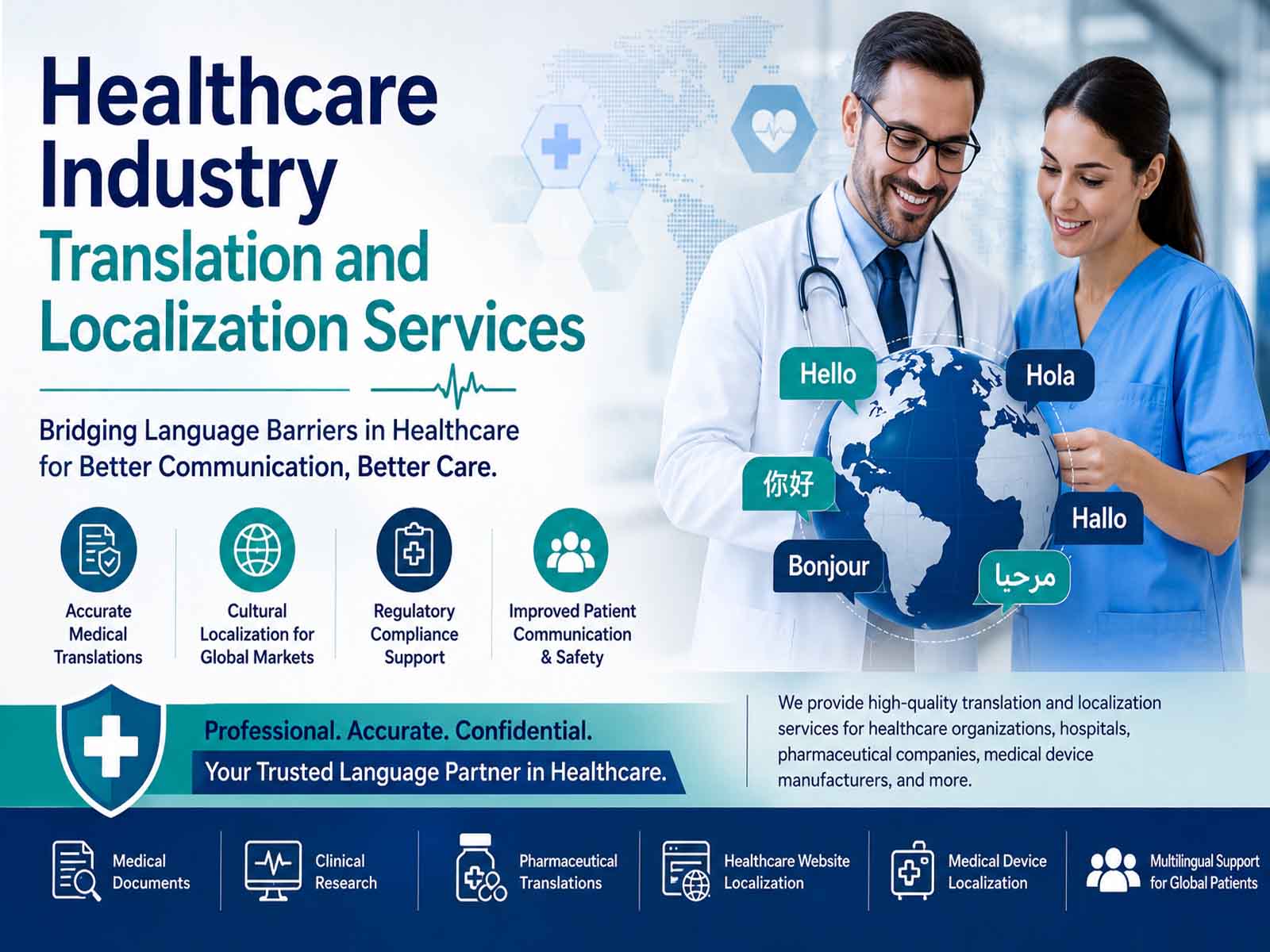
Healthcare Industry Translation and Localization Services
Introduction
The healthcare industry is one of the most important sectors in the world, providing essential medical care, treatments, and health information to millions of people every day. As globalization continues to connect people across different countries and cultures, healthcare organizations increasingly serve patients who speak different languages and come from diverse backgrounds. Effective communication has become a critical component of quality healthcare services, making translation and localization essential for healthcare providers, hospitals, pharmaceutical companies, medical device manufacturers, and healthcare technology organizations.
Healthcare industry translation and localization services help bridge language barriers by ensuring that medical information is accurately translated and culturally adapted for different audiences. These services go beyond simple language conversion. They involve the careful adaptation of medical content, patient information, clinical documentation, and healthcare resources to meet the linguistic, cultural, and regulatory requirements of specific regions. Accurate translation and localization improve patient safety, enhance communication, support compliance, and contribute to better healthcare outcomes.
As healthcare systems continue to expand globally, the demand for professional translation and localization services is growing rapidly. Organizations that invest in high-quality language solutions can improve accessibility, reach wider audiences, and provide more effective care to patients regardless of their native language.
Understanding Healthcare Translation and Localization
Healthcare translation refers to the process of converting medical and healthcare-related content from one language into another while preserving accuracy, meaning, and context. Medical terminology is often highly specialized, requiring translators with extensive knowledge of healthcare concepts and industry-specific language.
Localization, on the other hand, involves adapting content to align with the cultural, linguistic, and regional preferences of a target audience. This process ensures that translated materials are not only understandable but also relevant and appropriate for the intended users. In healthcare, localization may involve adjusting units of measurement, healthcare regulations, medical practices, and cultural references to suit local requirements.
Together, translation and localization enable healthcare organizations to communicate effectively with patients, healthcare professionals, researchers, and regulatory authorities across different countries and regions. These services play a vital role in ensuring that critical medical information is accessible, accurate, and culturally sensitive.
The Growing Importance of Language Services in Healthcare
The healthcare industry serves a diverse and multicultural population. Hospitals, clinics, and healthcare providers frequently interact with patients who speak different languages and may have varying levels of health literacy. Without effective communication, misunderstandings can occur, potentially affecting diagnosis, treatment, and patient outcomes.
Language services help healthcare organizations overcome these challenges by providing accurate translations of medical documents, patient instructions, informed consent forms, educational materials, and healthcare websites. By eliminating language barriers, healthcare providers can ensure that patients fully understand their medical conditions, treatment options, and healthcare responsibilities.
The increasing use of telemedicine, international healthcare services, and cross-border medical collaborations has further highlighted the need for professional translation and localization. As healthcare becomes more interconnected, organizations must be able to communicate clearly with global audiences while maintaining compliance with regional regulations and standards.
The Role of Translation in Patient Safety
Patient safety is one of the primary reasons why healthcare translation services are so important. Even minor translation errors can have serious consequences when dealing with medical information. Misinterpretations of medication instructions, treatment plans, or diagnostic reports can lead to incorrect decisions and potentially harmful outcomes.
Healthcare organizations rely on qualified medical translators who understand both the source and target languages as well as the medical terminology involved. These professionals ensure that translated materials accurately convey the intended meaning and maintain the integrity of the original content.
Accurate communication helps patients make informed decisions about their healthcare while reducing the risk of misunderstandings. It also enables healthcare providers to deliver consistent and effective care to patients from diverse linguistic backgrounds.
Benefits of Professional Healthcare Translation Services
Healthcare organizations gain numerous benefits from investing in professional translation and localization services. One of the most significant advantages is improved patient communication. When patients receive information in their preferred language, they are more likely to understand their healthcare options and follow medical recommendations.
Another important benefit is enhanced accessibility. Translation services make healthcare information available to broader audiences, ensuring that language differences do not prevent individuals from accessing essential medical resources. This inclusivity contributes to better public health outcomes and supports healthcare equity.
Organizations also benefit from increased credibility and trust. Patients are more likely to trust healthcare providers that communicate clearly and demonstrate a commitment to meeting their linguistic and cultural needs. Professional translations help establish confidence and strengthen relationships between healthcare organizations and the communities they serve.
Medical Document Translation in Modern Healthcare
Medical document translation is one of the most common applications of healthcare language services. Healthcare providers, pharmaceutical companies, and research organizations generate large volumes of documentation that must be translated accurately.
These documents may include patient records, clinical Professional Medical Translation Services for Healthcare Providers trial reports, medical research papers, treatment guidelines, healthcare policies, discharge summaries, and informed consent forms. Because these materials often contain complex medical terminology, specialized expertise is required to ensure accuracy and compliance.
Professional Medical Translation Services for Healthcare Providers enable hospitals, clinics, and healthcare professionals to communicate effectively with multilingual patient populations while maintaining the highest standards of accuracy and confidentiality. By utilizing professional translators with healthcare expertise, organizations can ensure that critical information is conveyed correctly and consistently.
Localization of Healthcare Content for Global Audiences
Healthcare organizations increasingly operate in international markets where cultural differences influence how information is perceived and understood. Localization helps adapt healthcare content to meet the expectations and preferences of different audiences.
This process involves more than translating words. It requires understanding local healthcare systems, cultural norms, patient expectations, and regulatory requirements. Healthcare websites, mobile applications, educational materials, and marketing campaigns must be carefully localized to ensure relevance and effectiveness.
Organizations that invest in localization can improve user experiences, increase engagement, and strengthen their presence in global markets. Localized content demonstrates respect for cultural diversity and helps healthcare providers connect with patients on a deeper level.
Regulatory Compliance and Healthcare Translation
Healthcare organizations must comply with numerous regulations governing patient information, medical documentation, and healthcare communications. These regulations often vary across countries and regions, making accurate translation and localization essential for compliance.
Regulatory documents require precise language and careful attention to detail. Errors or inconsistencies can result in legal complications, delays, or compliance violations. Professional language service providers help organizations navigate these challenges by ensuring that translated materials meet applicable standards and requirements.
Certified Medical Document Translation Services Online are often required for legal, regulatory, and administrative purposes. These services provide verified translations that meet official standards and can be used for licensing, accreditation, patient records, and other important healthcare processes.
The Importance of Cultural Sensitivity in Healthcare Communication
Cultural sensitivity is a fundamental component of effective healthcare communication. Patients' beliefs, values, and cultural backgrounds can influence how they perceive medical information and make healthcare decisions. Translation and localization services help ensure that healthcare content is respectful, appropriate, and culturally relevant.
By considering cultural factors, healthcare organizations can improve patient engagement and foster stronger relationships with diverse communities. This approach supports better communication, enhances patient satisfaction, and contributes to more positive healthcare experiences.
Culturally adapted healthcare materials also reduce the likelihood of misunderstandings and improve the effectiveness of educational campaigns, public health initiatives, and patient outreach programs.
Technology and Innovation in Healthcare Translation
Advancements in technology have transformed the translation and localization industry. Modern healthcare organizations use a combination of human expertise and technological tools to improve efficiency and consistency.
Translation management systems, terminology databases, and quality assurance software help streamline workflows and maintain accuracy across large volumes of content. Artificial intelligence and machine translation technologies are also becoming increasingly common, although human review remains essential for medical content.
Healthcare providers benefit from these innovations by reducing turnaround times, improving consistency, and managing multilingual content more effectively. Technology enables organizations to scale their language services while maintaining high standards of quality.
Global Expansion Through Healthcare Localization
Healthcare companies seeking international growth must communicate effectively with audiences in different markets. Translation and localization services support global expansion by enabling organizations to adapt their products, services, and communications for new regions.
Accurate Healthcare and Medical Translation Solutions ensure healthcare information remains clear, reliable, and culturally appropriate across multiple languages. These solutions help organizations expand their reach while maintaining consistency and quality in their communications.
Whether launching a healthcare application, conducting Accurate Healthcare and Medical Translation Solutions international clinical trials, or entering new markets, accurate translation and localization are critical for success. Organizations that prioritize language accessibility can build stronger global relationships and create more inclusive healthcare experiences.
Future Trends in Healthcare Translation and Localization
The future of healthcare translation and localization is closely tied to technological innovation and increasing global connectivity. Artificial intelligence, machine learning, and natural language processing are expected to play larger roles in supporting translation workflows and improving efficiency.
At the same time, the demand for human expertise will remain strong because healthcare content requires precision, context, and cultural understanding. Professional translators will continue to play a vital role in ensuring quality and accuracy.
As telemedicine, digital health platforms, and international healthcare collaborations continue to grow, healthcare organizations will increasingly rely on language services to support communication and accessibility. The ability to deliver multilingual healthcare experiences will become a key competitive advantage in the years ahead.
Conclusion
Healthcare industry translation and localization services are essential for effective communication in an increasingly globalized world. By breaking down language barriers and adapting content for diverse audiences, these services improve patient safety, enhance accessibility, support regulatory compliance, and strengthen healthcare outcomes.
Professional translation and localization enable healthcare organizations to connect with patients, healthcare professionals, and stakeholders across different languages and cultures. From medical document translation and certified healthcare communications to culturally adapted content and global expansion strategies, language services play a critical role in modern healthcare operations.
As the healthcare industry continues to evolve, organizations that invest in accurate, culturally sensitive, and professionally managed translation services will be better positioned to serve diverse populations and achieve long-term success in global healthcare markets.
Frequently Asked Questions (FAQs)
What are healthcare translation services?
Healthcare translation services involve converting medical and healthcare-related content from one language to another while maintaining accuracy and medical integrity.
What is healthcare localization?
Healthcare localization is the process of adapting healthcare content to meet the linguistic, cultural, and regulatory requirements of a specific region or audience.
Why is translation important in healthcare?
Translation ensures that patients and healthcare professionals can communicate effectively, reducing misunderstandings and improving healthcare outcomes.
What types of documents require medical translation?
Common documents include patient records, clinical trial reports, consent forms, treatment instructions, medical research papers, and healthcare policies.
What is a certified medical translation?
A certified medical translation is an officially verified translation that meets legal, regulatory, or administrative requirements.
How does localization improve patient experiences?
Localization makes healthcare content culturally relevant and easier to understand, improving patient engagement and satisfaction.
Can machine translation be used for medical documents?
Machine translation can assist with workflows, but human review is essential to ensure accuracy and avoid potentially harmful errors.
Who needs healthcare translation services?
Hospitals, clinics, pharmaceutical companies, medical device manufacturers, research organizations, and healthcare technology providers all benefit from translation services.
How do translation services support global healthcare expansion?
They enable organizations to communicate effectively with international audiences, comply with regulations, and adapt content for different markets.
What are the benefits of professional healthcare translation?
Professional healthcare translation improves accuracy, patient safety, accessibility, compliance, and communication across diverse linguistic and cultural groups.
Comments