
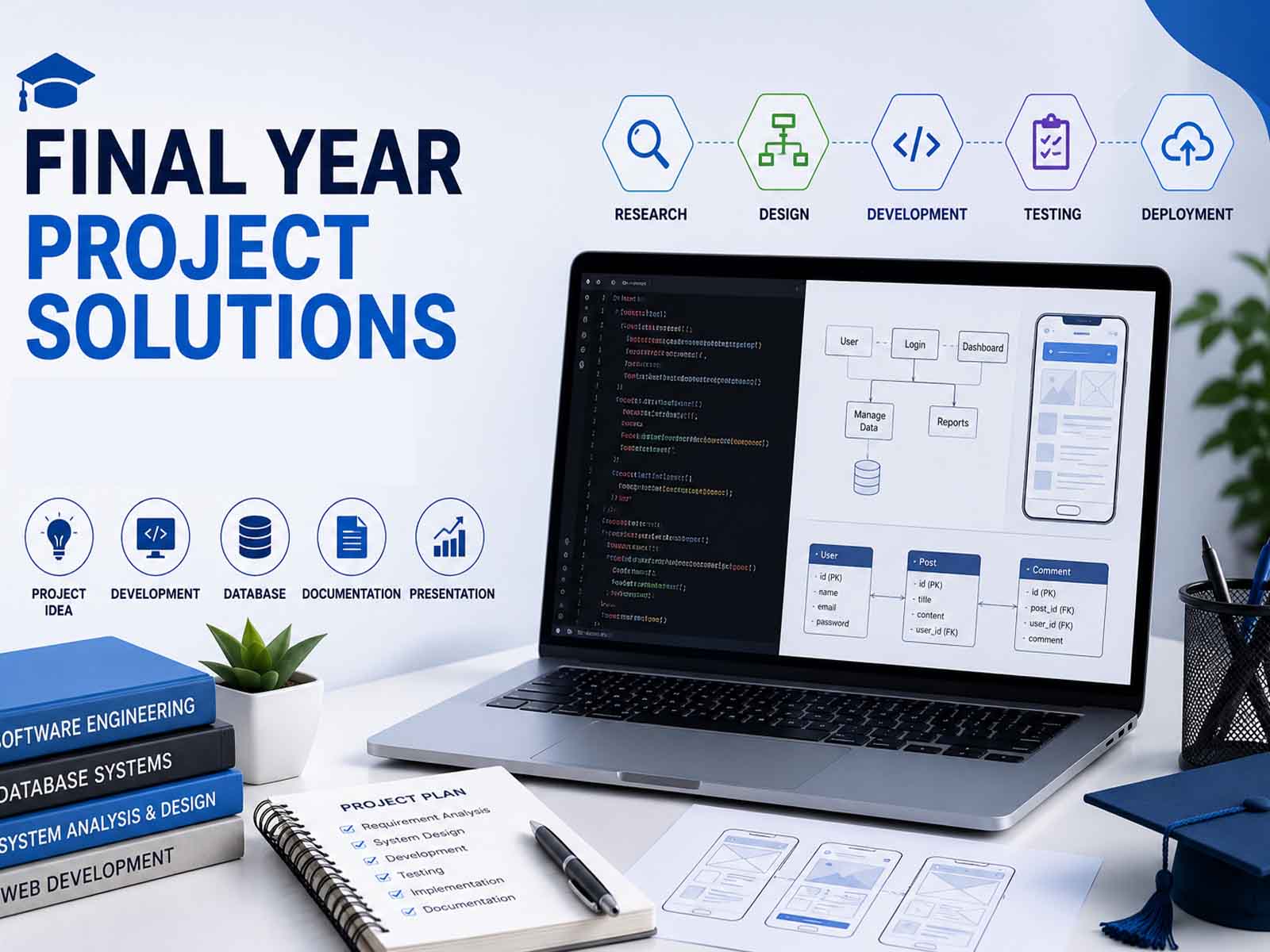
Academic Final Year Project Consulting and Development Solutions
Introduction to Academic Final Year Project Consulting and Development Solutions
Completing a final year project is one of the most demanding yet rewarding experiences in a student's academic career. It requires the seamless integration of theoretical knowledge, technical skill, and project management ability, all within a limited timeframe. Many students find it difficult to balance coursework, internships, part-time jobs, and personal responsibilities while simultaneously designing, developing, and documenting a complete academic project.
This is where Professional Final Year Project Development and Documentation Services become highly valuable. These services provide structured guidance, technical mentoring, and professional support that help students transform innovative ideas into successful academic projects while maintaining university standards and learning objectives.
Professional consulting bridges the gap between classroom learning and practical implementation. Whether students need assistance selecting an appropriate project topic, planning system architecture, solving programming challenges, or preparing comprehensive documentation, experienced consultants provide expert guidance throughout every stage of the project lifecycle.
The Growing Need for Academic Project Consulting
In recent years, university final year projects have become increasingly complex. Students are now expected to develop sophisticated software applications, implement emerging technologies, and prepare professional documentation that demonstrates both technical competence and research capability.
Modern projects frequently involve technologies such as Artificial Intelligence, Machine Learning, Cloud Computing, Cybersecurity, Blockchain, and the Internet of Things (IoT). Many of these advanced technologies receive limited classroom coverage, making practical implementation considerably more challenging for students.
Because of these increasing academic expectations, many students seek Academic Final Year Project Research and Development Assistance to better understand research methodologies, software engineering practices, project planning, and technical implementation while strengthening their own knowledge and practical experience.
Students also face the challenge of balancing multiple academic responsibilities. Coursework, examinations, internships, presentations, and job applications often leave limited time for managing a large software development project. Professional consulting services provide structured planning and continuous guidance that simplify the development process while reducing unnecessary stress.
Core Services Offered in Academic Project Consulting
Academic consulting covers every stage of the project lifecycle, allowing students to receive specialized guidance according to their individual project requirements. These services focus on improving project quality while ensuring students remain actively involved in every phase of development.
Topic Selection and Feasibility Analysis
Selecting the right project topic is one of the most important decisions during the final year project. Consultants assist students in identifying innovative ideas that satisfy university requirements, address real-world problems, and remain achievable within the available timeframe.
A feasibility study evaluates technical complexity, available development resources, software requirements, hardware needs, implementation challenges, project timeline, and expected outcomes. Proper feasibility analysis helps students avoid selecting projects that are either too simple to satisfy academic standards or too complicated to complete successfully.
Many universities encourage projects based on current industry trends. Therefore, consultants frequently recommend web applications, mobile applications, artificial intelligence systems, healthcare solutions, educational management systems, cloud-based platforms, cybersecurity applications, and business automation software that demonstrate practical value alongside technical excellence.
System Design and Architecture Planning
After selecting a project topic, consultants help students convert ideas into structured technical designs. Proper planning begins with requirement gathering, functional analysis, database planning, software architecture, interface design, and workflow development before programming begins.
Students prepare Entity Relationship Diagrams (ERDs), Data Flow Diagrams (DFDs), UML diagrams, use case diagrams, flowcharts, database schemas, and system architecture diagrams that clearly explain how every component of the application interacts.
Well-planned architecture reduces future development problems while improving software scalability, maintainability, security, and overall performance. Careful planning also simplifies implementation because developers follow a clearly defined roadmap throughout the development process.
Technical Development Support
One of the most valuable aspects of project consulting is technical development guidance. Experienced professionals help students understand programming concepts, software frameworks, debugging techniques, database management, API integration, system optimization, and coding best practices.
Students working on web applications, desktop software, mobile applications, artificial intelligence projects, or cloud-based solutions often receive Custom Final Year Project Solutions for University Students that are specifically designed to match their academic objectives, technical skills, and university evaluation criteria.
Documentation and Report Writing Assistance
Preparing professional documentation is one of the most important aspects of any academic final year project. Universities evaluate not only the completed software application but also the quality of the project report. Well-organized documentation demonstrates technical understanding, research capability, development methodology, testing procedures, and problem-solving skills.
Professional consultants help students organize reports according to university guidelines. Every chapter is structured logically with clear explanations, diagrams, screenshots, references, and technical descriptions that improve both readability and academic quality.
A complete report normally includes the introduction, literature review, problem statement, objectives, system requirements, feasibility study, system analysis, software design, implementation details, testing procedures, results, conclusion, future recommendations, and references.
Presentation and Project Defense Preparation
Many universities require students to present and defend their final year project before an academic evaluation panel. This stage is equally important because students must confidently explain their objectives, development methodology, technical implementation, testing results, and future improvements.
Consultants prepare students for presentations by helping them create professional PowerPoint slides, organize demonstrations, explain technical concepts clearly, and confidently answer questions asked by supervisors and external evaluators.
Mock presentation sessions further improve confidence by allowing students to practice project demonstrations and receive constructive feedback before the final evaluation.
Benefits of Working with Academic Project Consultants
Working with experienced academic consultants offers numerous educational and professional advantages. Students receive personalized guidance that improves project quality while strengthening their practical knowledge and technical skills.
Access to Specialized Expertise
Consultants possess practical experience across multiple programming languages, software frameworks, cloud platforms, database systems, mobile technologies, and emerging technologies. Their expertise enables students to solve technical problems more efficiently while learning industry-standard development practices.
Improved Project Quality
Professional guidance significantly improves software architecture, database design, programming quality, testing procedures, documentation, and presentation. Students produce projects that better satisfy university evaluation criteria while also becoming valuable additions to their professional portfolios.
Better Time Management
Large academic projects require careful planning and scheduling. Consultants help students divide projects into manageable milestones, prioritize development activities, monitor progress, and avoid unnecessary delays that commonly occur during software development.
Enhanced Learning Experience
Rather than simply solving technical problems, experienced mentors explain programming concepts, software engineering principles, debugging techniques, and research methodologies. This mentoring approach strengthens the student's own understanding while improving independent problem-solving ability.
Greater Confidence During Evaluation
Students who receive continuous mentoring generally feel more confident during project demonstrations, viva examinations, and final presentations. Better preparation allows them to answer technical questions more effectively and explain development decisions with clarity.
Maintaining Academic Integrity
Ethical academic consulting focuses on mentorship, guidance, and skill development rather than completing projects entirely on behalf of students. The objective is to improve learning while ensuring every student actively participates throughout the design, development, testing, and documentation process.
Professional consultants explain technical concepts, provide constructive feedback, recommend improvements, and assist students in overcoming programming challenges without compromising academic honesty. This approach enables students to confidently defend every aspect of their project during evaluation.
Students should always choose consulting services that operate transparently and comply with university academic integrity policies. Genuine learning should remain the primary objective throughout the entire project lifecycle.
Choosing the Right Consulting Partner
Selecting an experienced consulting partner is an important decision that directly influences project success. Students should evaluate technical expertise, industry experience, previous project portfolios, communication style, responsiveness, and client testimonials before choosing a consultant.
A reliable consultant understands university guidelines, adapts support according to individual project requirements, and provides continuous assistance throughout research, development, testing, documentation, and final presentation preparation.
Strong communication is equally important. Regular meetings, progress reviews, technical discussions, and timely feedback help ensure that project development remains organized and aligned with academic objectives.
The Long-Term Value of Quality Project Consulting
The advantages of academic project consulting extend far beyond the successful completion of a university project. Students who receive professional mentoring develop stronger technical knowledge, better problem-solving abilities, improved software engineering practices, and greater confidence in handling complex real-world projects.
Throughout the consulting process, students gain practical experience in system analysis, software architecture, database management, programming, testing, documentation, and project management. These practical skills become valuable assets when applying for internships, graduate programs, and full-time positions in the IT industry.
A professionally completed final year project also becomes one of the strongest components of a graduate's professional portfolio. During interviews, employers frequently ask candidates to explain their project objectives, technologies used, implementation methodology, challenges faced, and solutions developed. A well-executed project demonstrates both technical competence and practical experience.
Beyond technical knowledge, students improve communication, teamwork, documentation writing, presentation skills, and analytical thinking. These transferable skills continue to benefit graduates throughout their professional careers and support continuous learning in rapidly evolving technology fields.
Industry-Relevant Skills Developed During the Project
Academic consulting encourages students to adopt professional software development practices that are widely used in the technology industry. Students become familiar with project planning, requirement gathering, software design, coding standards, debugging techniques, testing strategies, version control systems, and deployment procedures.
Working with modern programming languages, development frameworks, databases, cloud platforms, APIs, and software engineering methodologies prepares students for professional development environments. This practical exposure significantly improves career readiness after graduation.
Students also learn how to work with development tools such as Git, GitHub, Visual Studio Code, Android Studio, Eclipse, IntelliJ IDEA, MySQL Workbench, Postman, Docker, and cloud hosting platforms depending on their selected project requirements.
Preparing for Future Career Opportunities
A successful final year project often creates opportunities beyond graduation. Students can showcase their completed software application during interviews, technology competitions, research conferences, startup incubators, and professional networking events.
Many graduates continue enhancing their university projects after graduation by adding new features, improving security, optimizing performance, or transforming them into commercial software products. Strong project foundations make future enhancements considerably easier.
Students who complete high-quality projects also demonstrate commitment, technical curiosity, and independent learning qualities that employers highly value when recruiting software engineers, web developers, mobile application developers, system analysts, data analysts, and cybersecurity professionals.
Conclusion
Academic Final Year Project Consulting and Development Solutions provide valuable support for students facing one of the most important milestones of their academic journey. From selecting an innovative topic to designing the system architecture, developing the software, preparing technical documentation, and confidently presenting the final project, expert guidance helps students achieve higher academic standards while strengthening practical skills.
By utilizing Professional Final Year Project Development and Documentation Services, students receive structured mentoring that improves software quality, project organization, technical implementation, and professional documentation. This guidance enables students to complete projects that satisfy university requirements while building confidence in their own technical abilities.
Furthermore, Academic Final Year Project Research and Development Assistance helps students conduct meaningful research, apply modern technologies, and follow systematic software engineering methodologies throughout the project lifecycle. Combined with Custom Final Year Project Solutions for University Students, these services ensure that every project is tailored to individual academic objectives, technical capabilities, and institutional guidelines.
Ultimately, a well-planned, professionally developed, and thoroughly documented final year project serves as lasting evidence of a student's knowledge, creativity, and technical competence. It not only contributes to academic success but also opens doors to internships, employment opportunities, higher education, and long-term professional growth in the ever-evolving field of information technology.
Comments